
Dallara IR18 Indycar
Learn about Dallara IR18 Indycar
Updated January 18, 2025
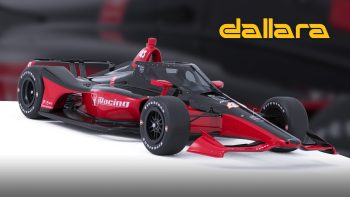
- Feels planted and razor-sharp at speed, but edgy and traction-limited in slow corners.
- The single most important skill is brake release: hit the brakes hard, then bleed pressure smoothly as the car slows.
- Most rookie spins come from stabbing the throttle too early while the wheel is still turned.
- Mistakes are moderately punishing: small errors cost lap time; bigger ones can quickly become spins or wall contacts.
- It rewards smooth, disciplined inputs with patience on entry and clean aggression on exit.
- Mental cue: brake hard-straight, release as you turn, and only add throttle as you unwind the wheel.
1. What This Car Is
- The Dallara IR-18 is IndyCar’s current-generation open-wheel car, built to race on road/street courses and ovals from short tracks to superspeedways.
- In iRacing, it sits near the top of the open-wheel ladder and typically runs in upper-license (B–A) series; it is not a beginner car but is approachable with solid fundamentals.
- Best suited for drivers who enjoy aero grip, heavy braking, and the challenge of both road and oval racing in one platform.
- Different from many other formula cars: more power than F3/F4, a bit less downforce than modern F1, no traction control or ABS, twin-turbo torque to manage, and unique “dirty air” behavior that matters for racecraft.
2. Key Specifications (Beginner-Relevant)
- Engine/drivetrain: Mid-engine, twin-turbo V6, rear-wheel drive • Meaning: Strong torque comes in quickly; be smooth with throttle in lower gears to avoid wheelspin.
- Power/weight: Roughly 700+ hp in a lightweight chassis (about 1600–1700 lb/730–770 kg) • Meaning: Explosive acceleration and very short braking zones; small mistakes happen fast.
- Tires: Slick racing tires (no tread) • Meaning: Need temperature to work; first lap will feel slippery—build heat with firm braking and progressive inputs.
- Downforce: High on road/street courses; trimmed packages on ovals • Meaning: The faster you go, the more it sticks; as speed drops, grip falls off—release brake accordingly and don’t over-trail into slow corners.
- Gearbox: 6-speed, paddle-shift sequential • Meaning: Downshift one gear at a time as revs fall; early downshifts can lock the rear and destabilize entry.
- Driver aids: No ABS, no traction control • Meaning: You must manage threshold braking and throttle yourself.
- Series format: Commonly both Fixed and Open setup series are available (varies by season) • Meaning: Start in Fixed to focus on driving; move to Open when you’re ready to tune setup.
3. Driving Tips for This Car
Braking
- Think “big push, smooth release”: apply strong, straight-line pressure initially, then taper off as speed and aero load drop.
- Trail brake just enough to keep the nose planted into turn-in; too much trail will overload the fronts, unweight the rear, and cause rotation snaps.
- If you’re locking fronts, reduce initial spike or release a touch earlier; if the rear wiggles on downshifts, delay downshifts and/or carry a bit more brake release before the gear change.
Throttle and Corner Exit
- Wait until the car is pointed and your hands are unwinding before squeezing back on power.
- Feed throttle progressively; turbo torque punishes stabs, especially in 1st–3rd gear.
- Short-shift on bumpy exits or in long traction-limited corners to calm wheelspin.
Steering and Weight Transfer
- Use small, deliberate inputs—this car has no power steering feel to hide bad habits; sawing the wheel overheats the fronts and kills exit.
- Connect the pedals to the wheel: brake release sets rotation, then the throttle steadies the rear; don’t ask the car to brake, turn, and accelerate all at once.
Aero Behavior and Kerbs
- At speed the front wing is powerful; at low speed you have far less front grip—adjust your expectations corner to corner.
- In traffic you’ll get understeer from dirty air; offset in the braking zone and turn-in to keep the front wing in clean flow.
- Use shallow kerbs; high or “sawtooth” kerbs can bottom the car and snap the rear.
Lap-to-Lap Stability Habits
- First lap: bring tires/brakes up gently—firm straight-line braking and progressive inputs.
- Focus runs: pick two corners and practice only brake release and throttle timing for five laps; consistency before ultimate pace.
- On ovals: be early and light with inputs, avoid pinching corner exits, and keep the car free (minimal scrub) to protect tires.
4. Common Beginner Mistakes
- Stabbing the throttle at apex • Fix: Wait until the wheel starts to unwind; squeeze on smoothly. If the car still steps out, short-shift or reduce steering angle sooner.
- Holding max brake too deep into the corner • Fix: Start strong, then bleed off pressure in a smooth ramp. Aim to be at light-to-zero brake just before apex in most medium/slow corners.
- Downshifting too early • Fix: Downshift as revs fall, not by corner position. If the rear wiggles, delay the last downshift until after initial turn-in or as you release brake.
- Overusing tall kerbs and street-course bumps • Fix: Sample kerbs gradually; if the car lands sideways or bottoms, use less kerb and open your line.
- Chasing setup before fundamentals • Fix: Run fixed (or a stable baseline) and target clean laps with repeatable brake points and throttle traces; then tune.
- Ignoring aero wash in traffic (road or oval) • Fix: Offset your line for cleaner air, brake a touch earlier, and prioritize exits over late dives.
5. Who Should Drive This Car
- You’ll enjoy the IR-18 if you love high-speed commitment, precision braking, and the challenge of mastering both road/street circuits and ovals.
- It develops elite fundamentals: brake release control, throttle discipline, managing aero grip/dirty air, and racecraft in slipstreams and packs.
- It prepares you for top-tier open-wheel and Indy-style oval racing in iRacing, and makes the step to the fastest formula cars far more manageable.